
Buying in Costa Rica
Can Americans Buy Property in Costa Rica?
If you’ve found your way here, chances are you’re researching: Can Americans buy property in Costa Rica? And if the answer is yes, your next question is probably how to buy property in Costa Rica without getting lost in unfamiliar laws, terminology, and paperwork.
If you're looking for the read-no-further short answer, then it's a simple yes. Yes, a U.S. citizen can buy property in Costa Rica. In fact, foreigners can buy property in Costa Rica, generally. You don’t need residency, citizenship, or a special permit. When you purchase titled property, you can hold it in your own name or through a Costa Rican corporation, with the same basic ownership rights as a Costa Rican citizen.
The process is more straightforward than many buyers expect, but of course there are things you’ll want to understand before moving forward. That includes how fee-simple ownership works, what due diligence involves, what closing typically costs, and the one coastal restriction that causes most of the confusion. We’ll walk through each of those clearly, then look at what buying and owning property can feel like in the La Fortuna and Arenal Volcano region.
Can Foreigners Legally Own Property in Costa Rica?
If you’re looking for the longer answer, it’s still yes. For titled property, foreigners can own fully and on the same terms as Costa Rican citizens.
Costa Rica recognizes fee-simple ownership, which means you hold the title outright. You can sell the property, rent it, leave it to your heirs, renovate it, or hold it indefinitely. There’s no residency requirement, government partner,expiring ground lease, or minimum amount of time you must spend in the country.
Ownership is recorded in the Registro Nacional, Costa Rica’s National Registry, a centralized public database of every titled property in the country. Anyone can search it. Your title, your boundaries, any mortgages, and any liens are all matters of public record.
That transparency makes due diligence far more knowable than a leap of faith, particularly when you work with a qualified Costa Rican attorney and complete a thorough title and property review.
The Coastal Concession Restriction and Why It Doesn’t Apply at Arenal Hills
The main exception applies along Costa Rica’s coastline under the Maritime Zone Law.
The first 50 meters (164 feet) inland from the high-tide line is public land and cannot be privately owned. The following 150 meters (492 feet) is generally designated as concession land administered by the local municipality. Within that concession zone, a foreign national who hasn’t held Costa Rican residency for at least five years generally cannot control more than 49% of the concession.
Beyond 200 meters (656 feet) from the high-tide line, ordinary titled ownership applies. The same is true for inland property.
Distance from High Tide | Status | Can a Foreigner Own It? |
First 50 m | Public land | No, nobody can own it |
Next 150 m | Concession land, leased from the municipality | Limited, see below |
Beyond 200 m | Ordinary titled land | Yes, fully |
Within that 150-meter concession band, a foreign national who has not held Costa Rican residency for at least five years may hold no more than 49% of the concession. The rest must be held by a Costa Rican citizen or a qualifying resident. This is why you'll hear that “foreigners can’t own beachfront property in Costa Rica.” That isn’t quite right, or at least not the whole story, but close enough to matter, since only a small fraction of the coast is titled rather than concession land.
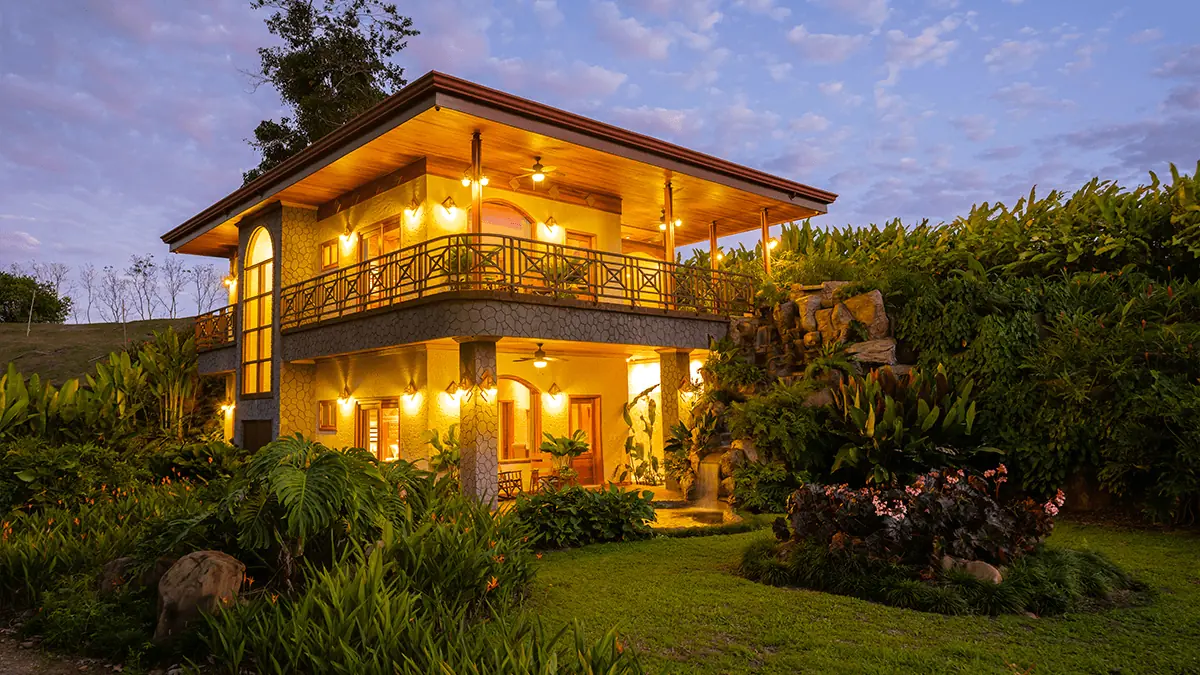
Here’s the part that matters for anyone looking away from the coast: this restriction is entirely coastal. It has no bearing on inland property. And as Arenal Hills is a private, resort-style community located inland near La Fortuna and Arenal Volcano, coastal concession rules don’t apply.
Property ownership at Arenal Hills follows the ordinary titled, fee-simple, full-ownership structure described above, without the maritime-zone complication that often causes confusion for buyers researching Costa Rican real estate.
How to Buy Property in Costa Rica: The Buying Process, Step by Step
Once you’ve found the right property, the buying process in Costa Rica follows a clear sequence. It may feel unfamiliar at first, but with the right local professionals guiding you, each step is manageable and transparent.
Make an offer and sign the purchase agreement. Once the main terms are agreed, they’re set out in writing through a purchase agreement. A deposit – typically 10% – is placed in escrow with a licensed escrow agent rather than paid directly to the seller.
Complete due diligence. This is where your Costa Rican attorney takes a close look at the property before you move forward. They’ll confirm clear title through the Registro Nacional, review the registered survey plan, check for mortgages, liens, easements, or unpaid taxes, and verify that the seller has the legal authority to sell.
Depending on the property, they may also review access, water availability, zoning, environmental considerations, and any community or condominium documents. This stage often takes three to six weeks, and it’s one of the most important parts of the process.
Prepare for closing. In Costa Rica, closing is handled by a notario público, who isn’t the equivalent of a U.S. notary public. A Costa Rican notary is a specially authorized attorney who prepares the public deed, or escritura pública. Once the final documents are ready, the buyer and seller sign, and the remaining funds are released according to the agreement.
Register the property. After closing, the deed is submitted to the National Registry. Once it has been recorded, the transfer appears in the public record under your name or the name of your corporation.
For a straightforward cash purchase, the full process often takes around 30 to 60 days from accepted offer to registered title. The timeline can vary, but a careful legal team will keep you informed at every stage, explain what’s happening, and make sure you’re comfortable before anything moves forward.
Should You Buy in Your Own Name or Through a Corporation?
You can purchase property in Costa Rica in your own name or through a Costa Rican corporation, and both structures are common among international buyers.
A corporation, usually a Sociedad Anónima (S.A.) or Sociedad de Responsabilidad Limitada (S.R.L.), holds the property while you own the company. This can be useful for shared or family ownership, estate planning, administration, or liability considerations. It also comes with ongoing responsibilities, including annual taxes, filings, corporate records, and beneficial-ownership reporting.
Buying in your own name may be the simpler option, particularly when you plan to hold one home for personal use. Neither structure is automatically better, and the right fit depends on how you intend to own, use, rent, finance, and eventually transfer the property. Your Costa Rican attorney and tax adviser should help you choose the structure before the purchase agreement is finalized.
How Much Are Closing Costs in Costa Rica?
Foreign buyers don’t pay a special surcharge simply because they aren’t Costa Rican. Closing expenses are generally calculated from the declared purchase price, the property’s registered fiscal value, or the applicable professional fee schedule, depending on the charge.
Cost | Approximate Rate |
Property transfer tax | 1.5% of the higher of sale price or registered fiscal value |
Registry stamps and fees | Approximately 0.5% |
Notary and legal fees | Approximately 1%–1.5% |
Escrow, due diligence, miscellaneous | Varies |
Typical total | Approximately 3.5%–5% of purchase price |
These figures are useful planning estimates rather than a fixed quote. The exact total will depend on the property value, the fees calculated under the applicable notarial schedule, and whether the transaction requires additional legal, escrow, corporate, translation, or due-diligence services.
Ongoing, the annual property tax is 0.25% of the property’s registered value, which is low by North American standards. Higher-value homes may also be subject to Costa Rica’s solidarity tax on luxury residences, with the threshold adjusted annually. Rates are current as of 2026, but you should confirm the figures for a specific property with your Costa Rican attorney or tax adviser.
Can Americans Get a Mortgage in Costa Rica?
Financing is possible, and buyers now have more options than they did in the past. In addition to select Costa Rican banks, certain international and private lenders offer financing for qualifying non-Costa Rican citizens purchasing property in Costa Rica. Even so, the choices remain more limited, and the requirements are often more involved, than what you’d likely find in your home country.
Lenders may require a substantial down payment, a formal property appraisal, detailed proof of income and source of funds, and a longer approval period. Rates and terms may also be less favorable than those available in the United States or Canada. For that reason, many international buyers still purchase with cash or arrange financing through savings, investment assets, or a home-equity facility in their home country. Developer or seller financing may also be available in certain transactions, although the terms vary.
The best approach is to explore financing early rather than assuming a particular option will be available. That gives you time to compare the true cost of borrowing, understand the requirements, and structure your offer with confidence.
Does Buying Property in Costa Rica Give You Residency?
Not automatically, but it may help you qualify for a residency pathway.
Costa Rica residency by investment, commonly known as Inversionista residency, allows qualifying applicants to pursue temporary residency through an approved investment, and Costa Rican real estate may count toward that requirement. As of mid-2026, the applicable minimum investment is in transition following the expiration of provisions that had reduced it from US$200,000 to US$150,000. Published guidance may therefore reference either amount, and buyers should confirm the current threshold before relying on a property purchase as part of a residency plan.
Please note that buying qualifying property doesn’t grant residency on its own. You’ll still need to apply, provide the required documentation, demonstrate that the investment meets the applicable rules, and receive approval through Costa Rica’s immigration process.
Another option for some buyers is Costa Rica’s digital nomad program. It isn’t connected to property ownership, but it allows qualifying remote workers and service providers to remain in Costa Rica for up to 12 months, with the possibility of extending their stay for another year. Applicants generally need to show monthly income of at least US$3,000, or US$4,000 when applying with dependents.
Again, though, we’ll emphasize: neither status is required to purchase property. You can own a home in Costa Rica without becoming a resident. And because residency requirements, documentation, and processing rules can change, it’s worth speaking with a qualified Costa Rican immigration attorney before treating a property purchase as part of a residency plan.
What Life Looks Like in La Fortuna and the Arenal Region
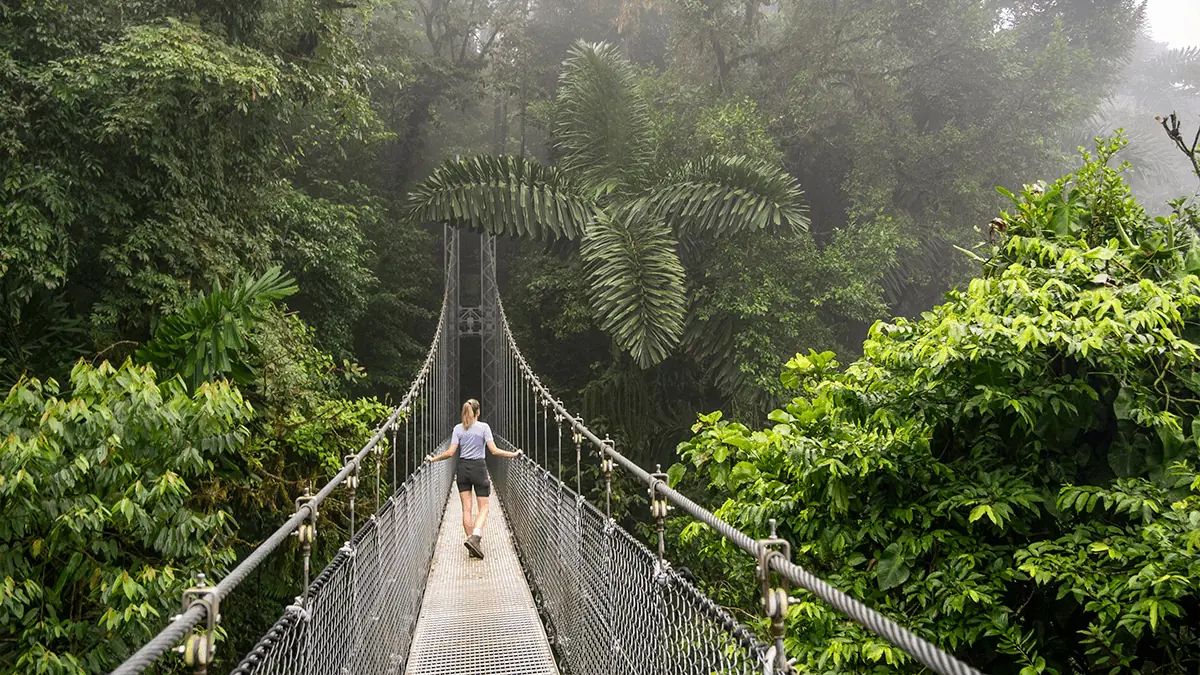
In contrast to Costa Rica’s sun-drenched, often blazing hot beach towns, the inland volcano region around La Fortuna offers a very different kind of lifestyle, especially for someone who plans to return often and truly use the home.
La Fortuna has year-round destination appeal. Lush rainforests, mountain landscapes, geothermal hot springs, and the iconic Arenal Volcano continue to draw visitors. The region is also unusually well positioned between Costa Rica’s two international airports, at roughly 3-3.5 hours from Juan Santamaría International Airport (SJO) near San José and around 2.5-3 hours from Guanacaste International Airport (LIR) in Liberia. Additionally, the ongoing Ruta 35 corridor upgrade is expected to improve the San José approach further, as sections of the project come online.
Just as importantly, La Fortuna has the practical infrastructure that helps make part-time ownership feel more comfortable. A new CCSS public health center opened in 2025, Hospital San Carlos is about an hour away in Ciudad Quesada, and fiber internet and 4G cellular service are established in the town core. Add restaurants, groceries, pharmacies, banking, transportation, and other daily services, and the region feels less remote than its rainforest setting might suggest.
Then, of course, there is the reason people are drawn here in the first place: Arenal Volcano, La Fortuna Waterfall, geothermal hot springs, rainforest trails, wildlife experiences, and Lake Arenal. It is one of Costa Rica’s most iconic destinations, with the rare combination of natural beauty, wellness, adventure, and everyday livability.
Owning at Arenal Hills
What La Fortuna has historically had less of is a modern, master-planned community designed around elevated living and an unparalleled lifestyle. Much of the residential market has been made up of individual homes and lots, each with its own systems, maintenance needs, and management challenges.
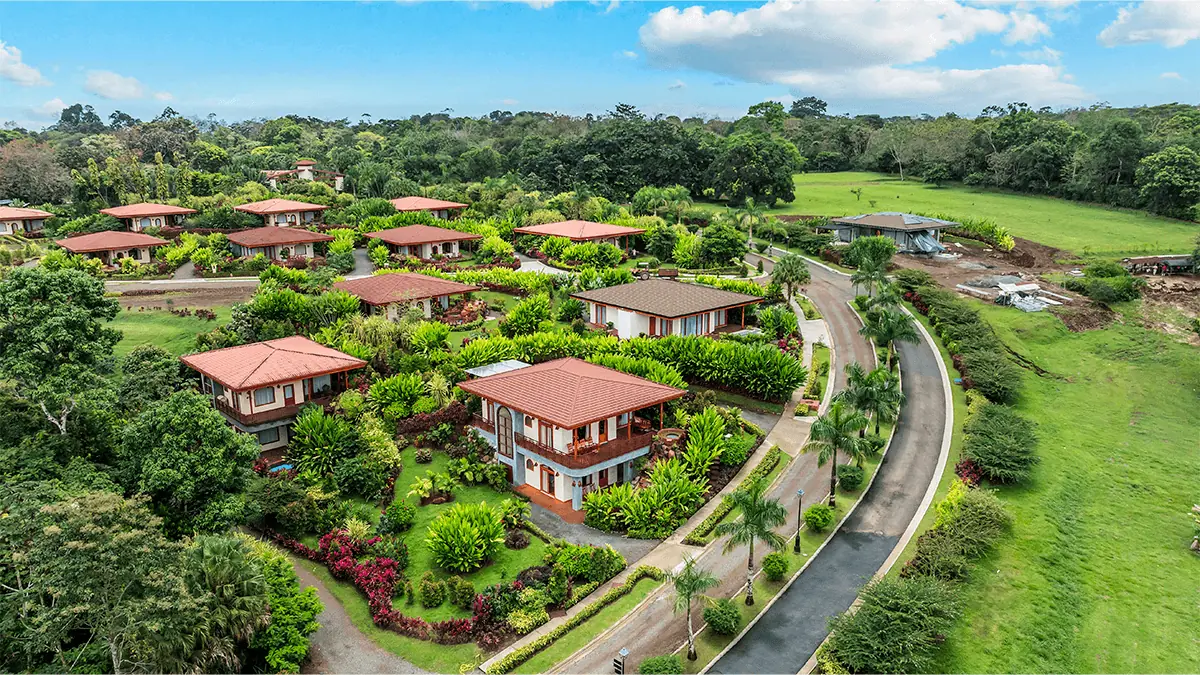
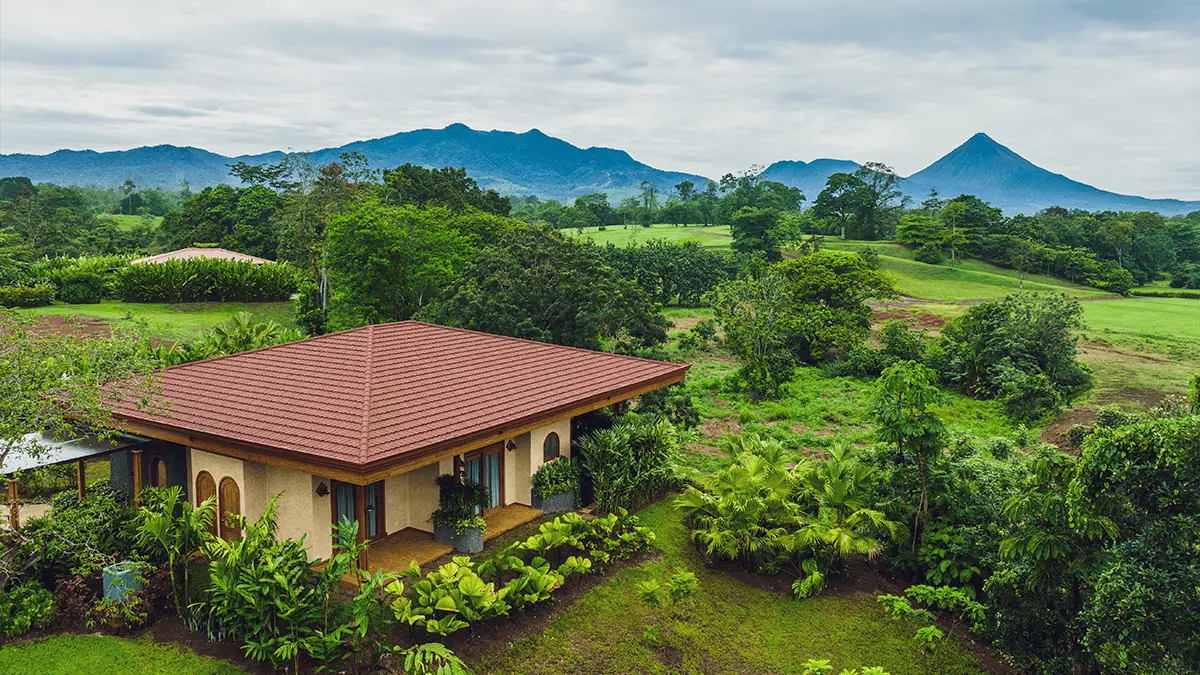
Arenal Hills was created to offer something more supported: a private resort-style community of luxury homes and vacation residences, surrounded by lush rainforest and mountain landscapes with views toward Arenal Volcano. Resort-inspired amenities, on-site care, and supported ownership are already part of the experience.
It is designed around the way many international buyers actually use a home in Costa Rica: returning throughout the year, enjoying it as a private rainforest home base, and knowing the property and community are cared for when they are away. The homes are located on ordinary titled land and held fee-simple under the same ownership structure described above.
So while the legal answer is straightforward, the more personal question is what you want ownership to feel like: managing a standalone property on your own, or becoming part of a community where the care, privacy, amenities, and natural setting are already built into the experience.
FAQ: How to Buy Property in Costa Rica
Can a U.S. citizen buy property in Costa Rica without residency?
Yes. Costa Rica doesn’t require residency or citizenship to own titled property. A U.S. citizen can purchase, register, and hold property fee-simple while living full-time in the United States and visiting Costa Rica under the immigration terms that apply to them.
Is buying property in Costa Rica safe?
Costa Rica has a centralized National Registry where titled property ownership, mortgages, liens, and other registered encumbrances can be reviewed before purchase. The most important protections are working with a qualified independent Costa Rican attorney, using a licensed escrow provider, and completing a full title and due-diligence review before closing.
How much are property taxes in Costa Rica?
The standard annual municipal property tax is 0.25% of the property’s registered value. Higher-value homes may also be subject to Costa Rica’s solidarity tax on luxury residences, with the threshold adjusted periodically. Confirm the current treatment of any specific property with your Costa Rican attorney or tax adviser.
Can foreigners own beachfront property in Costa Rica?
Ownership depends on the property’s location and title status. The first 50 meters (164 feet) inland from the ordinary high-tide line is public land and cannot be privately owned. The following 150 meters (492 feet) is generally concession land, where restrictions apply to foreigners who haven’t held Costa Rican residency for at least five years. Beyond the 200-meter (656-foot) maritime zone, and for ordinary titled property inland, the coastal concession restriction doesn’t apply.
How long does it take to buy property in Costa Rica?
For a straightforward cash purchase, the process often takes approximately 30 to 60 days from an accepted offer to closing and registration. Due diligence commonly accounts for several weeks of that period. The timeline may be longer if the title review, financing, corporate structure, survey, or other property-specific matters require additional work.
Do I need to form a Costa Rican corporation to buy property?
No. Foreign buyers can hold titled property in their own names. Purchasing through a Costa Rican corporation is also common and may suit shared ownership, estate planning, administration, or liability needs, but it brings annual tax, filing, and compliance obligations. The right structure depends on how you plan to own, use, rent, and eventually transfer the property, so it’s a decision to make with your Costa Rican attorney and tax adviser.
Ready to Explore Ownership in La Fortuna?
Costa Rica decided, decades ago, to treat foreign owners the same as its own citizens, and that decision hasn't changed. The real work is not proving that you can buy, but making sure you buy well: with the right attorney, complete due diligence, a clear understanding of the costs, and a property that fits the way you actually want to live, return, and spend time in Costa Rica.
At Arenal Hills, that means more than choosing a home. It means finding a private rainforest home base within a resort-style community where thoughtful architecture, on-site care, amenities, and the beauty of La Fortuna are already part of the experience.
Explore Available Villas at Arenal Hills
This article offers general information, not legal, tax, or financial advice. Property law, tax rates, and residency requirements change, and individual circumstances vary. Consult a qualified Costa Rican attorney before making any purchase decision.
Sources: Costa Rica Maritime Zone Law (Ley 6043); Registro Nacional; Law 9996 (investor residency); Law 10008 (digital nomad visa); La Fortuna & Arenal Market Intelligence, Daveed Hollander, Coldwell Banker Costa Rica, July 2026 (citing MOPT, IDB, CCSS, ICE, and live market listings). Transfer tax and closing cost ranges current as of 2026.

Arenal Hills Sales Team
Tel: +1 (201) 907-2898
Email: hello@arenalhills.com
Arenal Hills Office
C. 474 50, Provincia de Alajuela, La Fortuna, 21007, Costa Rica
Map →
CR Tel: +506 8484 4642
US Tel: +1 (844) 694 4557
Email: arlene@arenalhills.com
Arenal Hills Florida Office
5331 Spring Hill Drive, Spring Hill, Florida 34606
Arenal Hills Community
Tres Esquinas, Los Ángeles, San Ramón, Alajuela, Costa Rica, 20208.
Map →
Arenal Hills is a development of Costa Rica Land Capital Partners, LLC, a Florida limited liability company, Florida Document No. L07000012341.
© 2026 Costa Rica Land Capital Partners, LLC. All rights reserved.