
Living in Arenal
Explore Arenal
Living in La Fortuna, Costa Rica: A Resident's Guide to the Arenal Volcano Region
Living in La Fortuna, Costa Rica is the choice for intrepid, independent people drawn to a greener, more deeply rooted side of the country: lush rainforest, mountain landscapes, geothermal water, wildlife, and daily life at the foot of Arenal Volcano. It's less the expected version of living in Costa Rica but more of what you love about the country, with real landscapes, local rhythms, and an unmistakable sense of place still very much intact.
And while the setting is immersive, living here doesn’t mean giving up the practical things that make a place comfortable over time. La Fortuna is roughly 3 hours from San José and about 2.5 to 3 hours from Liberia, with a modern public health center, reliable fiber-optic internet, supermarkets, pharmacies, schools, banks, restaurants, and other everyday services. Six geothermal hot-springs resorts are within about 15 minutes, which also says something about how seamlessly the region’s natural appeal and tourism fit into daily life.
The climate is part of it, too. Rainfall is spread more evenly across the year here than in many other parts of Costa Rica, rather than being concentrated into one sharply defined wet season followed by months of intense dryness. The result is a landscape that stays lush and green year-round, with a rhythm that’s less seasonal and more consistent from one visit – or one chapter of living here – to the next.
Most people know La Fortuna as somewhere to spend a few nights. This guide is for all those who have discovered the secret and are now wondering what it might be like to stay much longer: for a season, part of every year, or perhaps for good.
Where Is La Fortuna, Costa Rica, and What’s Around It?
If you drew a line between San José and Costa Rica’s North Pacific beaches, La Fortuna would sit almost along the drawn route, tucked into the country’s northern lowlands at the base of Arenal Volcano.
La Fortuna is part of San Carlos, one of the cantons – or roughly the Costa Rican equivalent of a county – within Alajuela Province. (Costa Rica is divided into seven provinces, and each province is divided into cantons and districts.) La Fortuna is both the name of the district and its central town.
According to INEC’s 2022 Population and Housing Estimate, the La Fortuna district has approximately 16,150 residents, making it a sizable town by Costa Rican standards. But daily life is concentrated within a relatively compact downtown area. Drive just a few minutes beyond it, and supermarkets, restaurants, banks, and storefronts quickly give way to farms, small communities, rainforest, rivers, hot springs, and broad green landscapes.
What Is Arenal Volcano?
Arenal Volcano is a 1,633-meter (5,358-foot) stratovolcano and the visual anchor of the region. Its near-symmetrical cone rises above the rainforest and can appear almost unexpectedly – at the end of a road, beyond a pasture, or framed between trees – before slipping behind the clouds again.
To the west is Lake Arenal, Costa Rica’s largest lake. The original natural lake was expanded significantly with the construction of the Sangregado Dam in 1979, creating the broad lake landscape that now supports hydroelectric generation, boating, fishing, wind sports, and lakeside communities.
What makes living in La Fortuna especially appealing is how much of the Arenal region is close at hand. The places visitors travel across the country to experience aren’t occasional weekend trips when you live here. Many are within an hour of home:
Destination | Approximate drive from La Fortuna |
Arenal Volcano National Park | 25 minutes |
La Fortuna Waterfall | 10 minutes |
Major hot-springs resorts (six of them) | 5–15 minutes |
Místico Hanging Bridges | 25 minutes |
El Castillo | 25 minutes |
Nuevo Arenal | 50 minutes |
Ciudad Quesada (regional city, Hospital San Carlos) | 1 hour |
Tilarán | 1 hour 20 minutes |
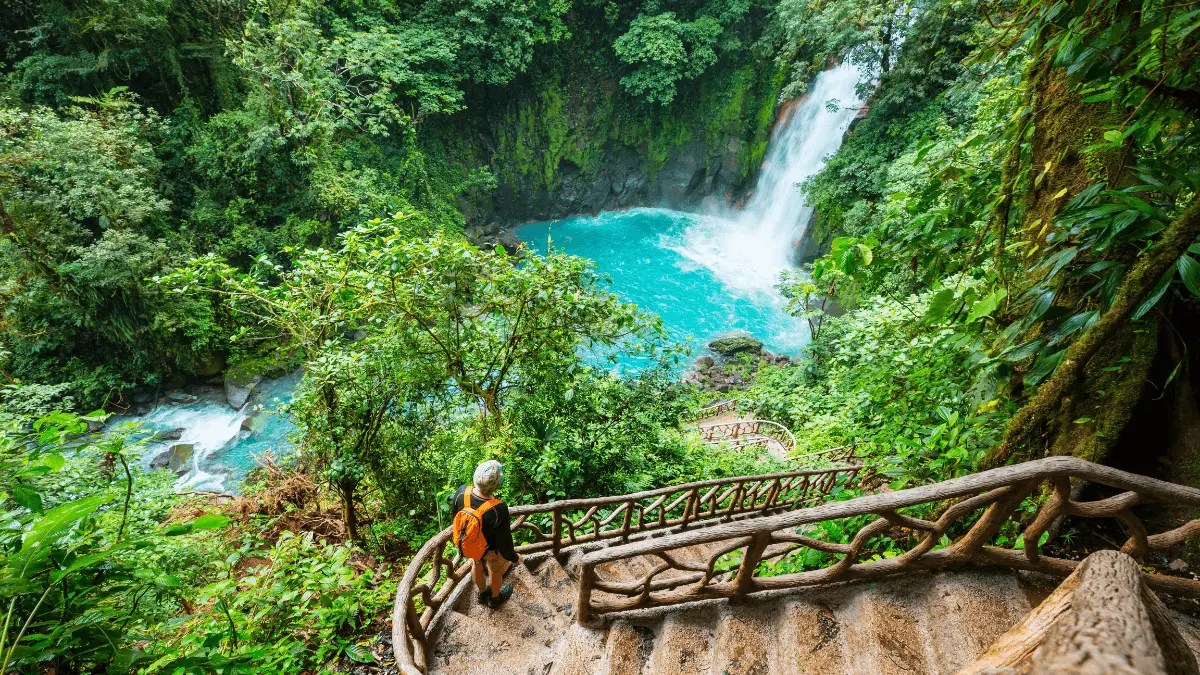
Río Celeste / Tenorio Volcano National Park | 1 hour 30 minutes |
Drive times are approximate and may vary with road, traffic, and weather conditions
Proximity to the region’s wonders changes the texture of daily life. You’re not simply living near one beautiful landmark; you’re surrounded by the hot springs, waterfalls, trails, wildlife, lake, and adventure experiences that make the Arenal region one of Costa Rica’s most iconic destinations.
And because La Fortuna welcomes travelers throughout the year, residents also benefit from services that go well beyond what you might expect in a town this size: full supermarkets, banks, hardware stores, a farmers’ market, veterinarians, dentists, gyms, pharmacies, schools, and a restaurant scene shaped by both local life and international visitors.
Where to Live in Costa Rica: How the Arenal region Compares
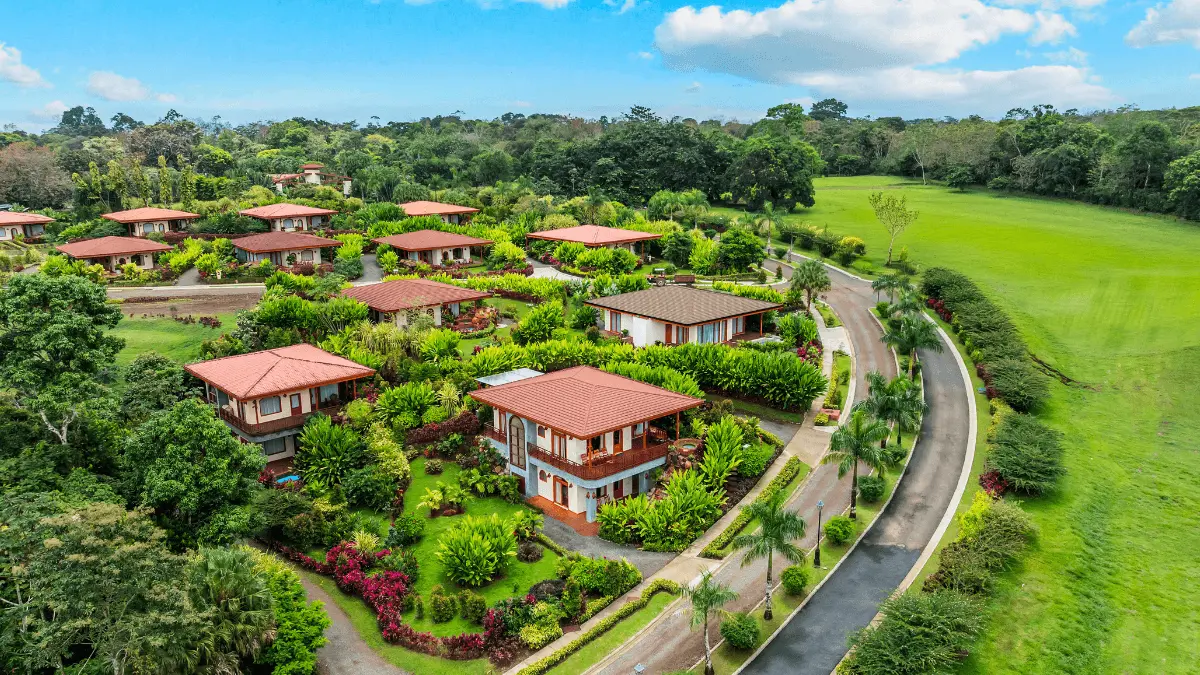
Most people who research living in Costa Rica are shown the same familiar options: the Central Valley, Guanacaste, or the southern Pacific. The Arenal region belongs in that conversation too, especially for anyone looking for a greener, less saturated place to live without giving up access to the country’s major services and airports.
The Central Valley – including Escazú, Santa Ana, Atenas, and Grecia – is home to the largest concentration of Costa Rica’s population, including many foreign residents. It offers the country’s strongest access to major hospitals and specialized medical care, a mild climate, and proximity to Juan Santamaría International Airport. It is also Costa Rica’s most densely populated region, with the traffic, development, and urban pace that come with that. From La Fortuna, many of those services are still within roughly a 2.5- to 3-hour drive.
Guanacaste and the North Pacific have received much of Costa Rica’s second-home and resort attention over the last several decades. The region offers beaches, dry heat, a well-established luxury market, and access to Liberia’s international airport. Its popularity has also created familiar pressures in some communities, including heavier development, smaller lots, rising prices, congestion, and infrastructure stretched by rapid growth.
The La Fortuna & Arenal region is less mature as a residential real estate market, but that doesn’t mean it’s undeveloped. In lived experience, it means the market hasn’t become oversaturated. Buyers can still find a stronger sense of space, more generous homesites, and a landscape that’s distinctly Costa Rican, with rainforest, mountains, hot springs, rivers, and Arenal Volcano shaping daily life.
Central Valley | Guanacaste and the North Pacific | Arenal and La Fortuna | |
Climate | Mild and spring-like | Hotter and drier, with stronger seasonal change | Mild, humid, and lush year-round |
Landscape | Urban and suburban valleys and mountains | Beaches and tropical dry forest | Rainforest, volcano, mountains, rivers, and lake |
Healthcare access | Country’s strongest concentration of hospitals and specialists | Regional hospitals and private care, with more services developing | Modern La Fortuna health center; Hospital San Carlos about 1 hour away |
International airport access | SJO generally 30–60 minutes, depending on location | LIR generally about 1 hour from major beach communities | SJO about 3–3.5 hours; LIR about 2.5–3 hours |
Residential market | Established and densely developed | Established, with saturation in some high-demand areas | Growing, but not oversaturated |
Overall feel | Convenient, connected, and urban to suburban | Coastal, active, and resort-oriented | Green, restorative, spacious, and deeply connected to place |
When it comes to living in Costa Rica, the right choice depends on what matters most to you. The Central Valley offers the easiest access to major hospitals and city services. Guanacaste offers the beach and a mature resort market. La Fortuna offers something harder to find: year-round greenery, adventure, hot springs, a strong sense of place, and a more accessible residential market.
What’s the Weather Really Like? Understanding La Fortuna’s Green Season
Weather matters differently when you’re living somewhere than when you’re trying to fit every waterfall, hike, and hot-springs visit into a four-day vacation. And when it comes to La Fortuna, the typical tourist framing often misses the bigger picture.
La Fortuna and the Arenal region sit on the Caribbean side of Costa Rica’s continental divide, the mountain chain that more or less bisects the country. On the Pacific side, seasons are much more sharply defined: several months with little or no rain, followed by a pronounced green season. The Caribbean-influenced side isn’t quite so marked; it doesn’t have the same clearly defined dry season, and rainfall is generally distributed more evenly across the year.
For daily life, that can be a very good thing. Instead of moving from months of parched ground and browned landscapes into months of concentrated rain, La Fortuna follows a gentler rhythm. January through April is typically the drier stretch, although there’s still enough rainfall to keep gardens, pastures, and rainforest vegetation green. September and October may also see less rain, though conditions vary from year to and some seasons are very wet.
What Does La Fortuna’s Weather Mean for Daily Life?
You won’t usually see the cracked ground and dry-season browning common in other parts of Costa Rica. The rainforest stays lush throughout the year, rivers continue to flow, and the region’s waterfalls remain part of the landscape in every season – even if their volume rises and falls with recent rainfall.
Rain also doesn’t automatically mean losing an entire day. Many days begin bright or partly cloudy, with showers arriving later and passing through, rather than settling in from morning to night. Longer rainy spells certainly happen, but they aren’t the whole story.
For someone living in La Fortuna, this means the place you fall in love with during one season still feels recognizably like itself in another. There isn’t a long stretch when the landscape loses its color or the region’s central pleasures – rainforest, rivers, hot springs, wildlife, and waterfalls – go dormant. The rhythm changes, but the Arenal region remains green, restorative, and very much alive year-round.
Daily Life in La Fortuna: Healthcare, Internet, Groceries, and Services
The practical questions are usually what determine whether a place works beyond the first few weeks. Can you see a doctor, work reliably online, find what you need for dinner, and take care of everyday errands without turning each one into a full-day trip? For a town of its size, La Fortuna answers those questions surprisingly well.
Healthcare in La Fortuna
Costa Rica’s public healthcare system is run by the Caja Costarricense de Seguro Social, usually called the Caja or CCSS. In early 2025, the Caja opened a new Área de Salud La Fortuna, replacing the much smaller facility that had served the community since 1967.
The new health center covers approximately 5,200 square meters (56,000 square feet) and serves roughly 41,000 people across La Fortuna, Monterrey, Venado, and Peñas Blancas de San Ramón. Services include urgent care, a pharmacy, laboratory testing, dentistry, family medicine, nutrition, obstetrics, social work, and two Ebáis, the local primary-care teams at the heart of Costa Rica’s public health system.
For more specialized or hospital-level care, Hospital San Carlos is about an hour away in Ciudad Quesada. San José’s larger private hospitals and specialty centers are farther afield, but still accessible for planned appointments and elective care.
Internet and Remote Work
Reliable connectivity is no longer unusual in La Fortuna. Fiber-optic internet and 4G cellular service are available in and around the town center, supporting residents who work remotely, run businesses, or simply want the same everyday connectivity they’re accustomed to at home.
Costa Rica’s digital nomad program has also made extended stays more practical for qualifying remote workers. Current requirements generally include documented monthly income of at least US$3,000 for an individual or US$4,000 when applying with dependents, with an initial stay of up to 12 months that may be renewed once. Because immigration requirements can change, applicants should confirm the current rules before making plans.
Groceries and Everyday Services
La Fortuna has full-size supermarkets, pharmacies, banks, hardware and building-supply stores, vehicle services, veterinarians, dentists, gyms, schools, and a farmers’ market where you’ll find produce grown throughout the region.
You’ll also find a restaurant scene that’s much broader than you might expect from a town this size. The combination of local families, international residents, and year-round tourism supports everything from traditional Costa Rican sodas to cafés, bakeries, casual international restaurants, and more polished dining.
For highly specialized purchases, Ciudad Quesada is about an hour away, while San José remains the destination for major shopping trips. But most daily needs can be handled right in La Fortuna.
Renewable Electricity in Costa Rica
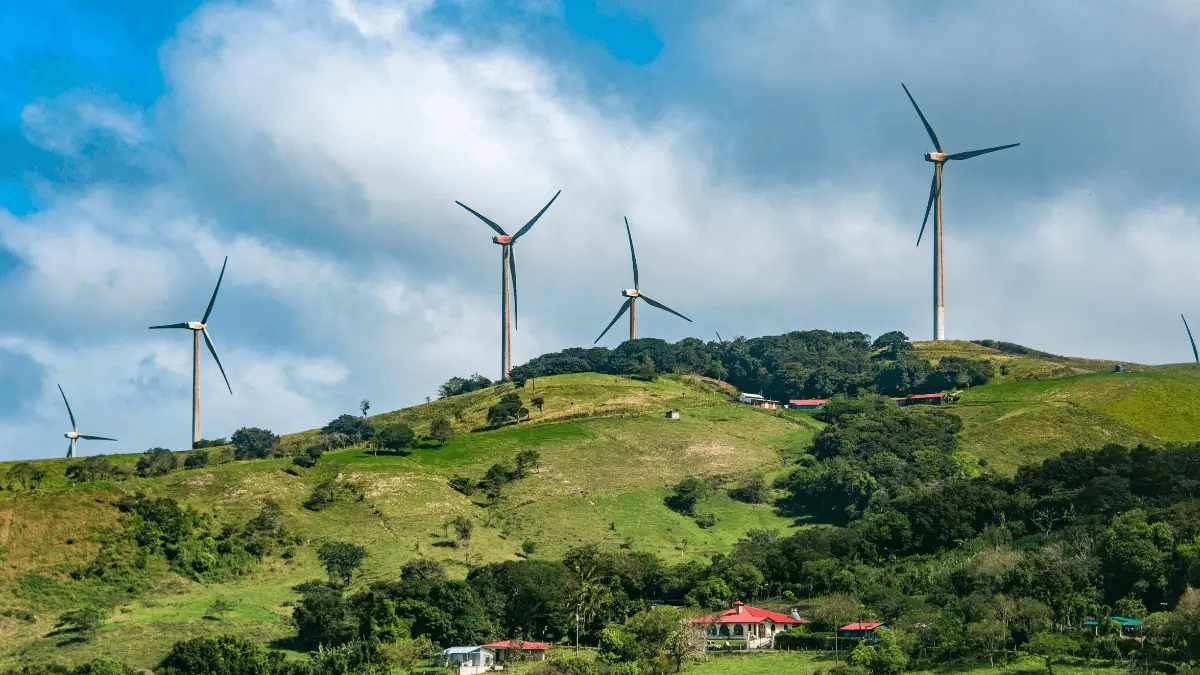
Costa Rica’s electricity system is one of the country’s quieter everyday advantages. In 2025, 98.6% of the country’s electricity was generated from renewable sources, including hydropower, geothermal energy, wind, biomass, and solar. Lake Arenal and the Sangregado Dam form part of that national generation system.
Note: That percentage isn’t fixed from year to year. Hydroelectric power remains an important part of Costa Rica’s electricity mix, so rainfall, reservoir levels, wind conditions, and broader climate patterns can affect the annual renewable share. Even with that variation, renewable sources have consistently supplied the great majority of the country’s electricity for many years.
Getting In and Out: How Far Is La Fortuna from Costa Rica’s Airports?
One of La Fortuna’s practical advantages is that it’s served by both of Costa Rica’s international airports. That gives residents, part-time owners, and long-stay visitors more flexibility when comparing routes, schedules, and airfare.
Airport | Approximate Drive |
Juan Santamaría (SJO), near San José | 3 to 3.5 hours |
Guanacaste International Airport (LIR), near Liberia | 2.5 to 3 hours |
Drive times are approximate and can vary with traffic, weather, roadwork, and your exact starting point.
Guanacaste Airport is the slightly closer option, while Juan Santamaría typically offers the broader connection to San José and the Central Valley. Having both within reach means you’re not tied to a single gateway, which you’ll appreciate when you’re returning several times a year, staying for a season, or welcoming friends and family.
The primary route from San José is currently being improved, and updates to the road to San Carlos are underway in phases. The central Sifón–La Abundancia section covers nearly 30 kilometers, and MOPT has also begun work on the southern portion of the corridor. These projects are intended to improve access to Costa Rica’s Northern Zone. We’ll update as more information is available.
For now, the most useful way to think about La Fortuna’s location is this: it’s immersed in rainforest and mountain landscapes, but it isn’t cut off. Two international airports, San José, Liberia, Ciudad Quesada, and the country’s major services are all within a manageable drive – close enough for regular access, but far enough away that daily life is still distinctly removed from Costa Rica’s busiest corridors.
What Living in La Fortuna Is Actually Like
So many people fall in love with Costa Rica for its biodiversity, wildlife, and those impossible green landscapes where every shade seems to exist at once. If you didn’t know green could be a rainbow, La Fortuna will prove otherwise. And unlike many places where that version of Costa Rica is something you visit for a few days, the Arenal region gives you the chance to live within it.
People who are happiest here tend to love the same details: mornings when Arenal Volcano is out and the whole valley looks sharp-edged and green; afternoons when the rain cools the air and everything smells like wet earth and vegetation; howler monkeys as an alarm clock; toucans as a routine event rather than a rare sight.
Restorative When You Want It, Adventurous When You Don’t
La Fortuna can be deeply restorative, but it’s hardly sleepy. The region has developed a strong wellness culture around its geothermal hot springs, mineral-rich waters, spas, and rainforest setting.
At the same time, La Fortuna is one of Costa Rica’s best-known adventure destinations. Hiking, whitewater rafting, canyoning, ziplining, hanging bridges, wildlife tours, waterfalls, and Arenal Volcano National Park are all part of the region’s everyday landscape, not experiences reserved for one annual vacation.
What you get is a version of rural life with the edges taken off. You can live among rainforest, farms, rivers, wildlife, and broad green landscapes while staying close to a well-equipped town and the services supported by a strong year-round tourism economy. It’s private and restorative when you want it to be, active and stimulating when you don’t – and that balance is a large part of what makes living in La Fortuna, Costa Rica so distinctive.
Living in the Arenal Region at Arenal Hills
Most homes around La Fortuna fall into one of two broad categories: standalone residences on individual lots or properties designed primarily for short-term rentals. Both can be the right choice, but they often leave the same practical question unanswered: who looks after the home when you’re not there?
Arenal Hills was designed around that question. It’s a private resort-style community of luxury homes and vacation residences near La Fortuna, surrounded by lush rainforest, mountain landscapes, and views toward Arenal Volcano. Here, the landscape may feel wonderfully removed, but ownership itself is supported by on-site care, community maintenance, resort-inspired amenities, and a managed vacation-stay pathway.
Three things make that especially relevant for anyone considering living in La Fortuna full-time, part-time, or for one extended chapter of life.
A Home Base Designed for the Way You’ll Actually Use It
Arenal Hills is designed for vacation-home ownership, part-time residence, extended stays, and full-time living. You can return for a season or throughout the year, enjoy your villa as a private rainforest home base, and know that the property and community are cared for when you’re away.
That’s what supported ownership means here. Rather than leaving every detail to an individual owner, Arenal Hills brings property care, landscaping, community maintenance, access systems, and vacation-rental support together within one managed community.
Model Home Designs Shaped by Hospitality
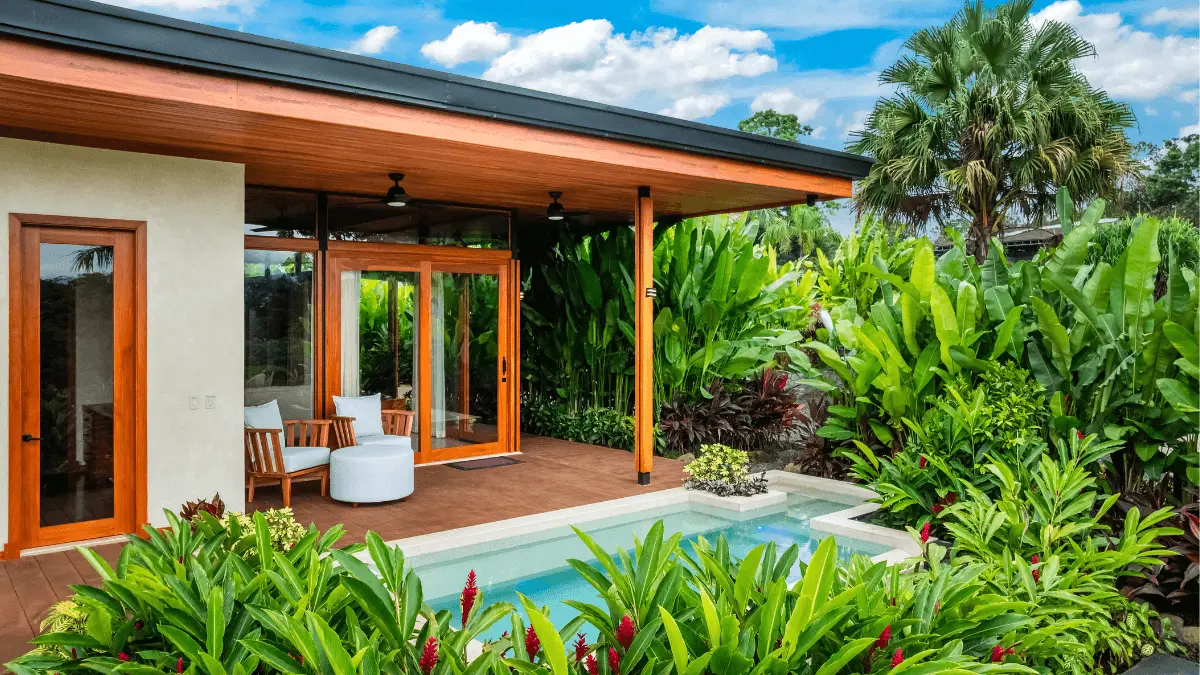
The Arenal Hills model home designs include Villa Torres, Villa Ramírez, Villa Seville, Villa Fleta, and Villa Bernabè. Each has its own layout and character, but all share the community’s hospitality-informed architectural language: expansive glass, generous indoor-outdoor living, native hardwoods, stone, Peruvian marble, custom woodwork, private pools, terraces, and spaces designed to open toward the rainforest, gardens, mountains, water, or Arenal Volcano, depending on the homesite.
The design influence is connected to respected hospitality properties in the region, including The Springs Resort & Spa and Nayara Resorts. That experience comes through in the scale, comfort, materials, and attention to detail, while the homes still offer the privacy and individuality of single-family-style villa living.
A Private Resort-Style Community
Arenal Hills brings the ease of resort living into a community that’s still private, grounded, and connected to nature. Amenities include the Cabana Club, a community pool, gym, pickleball court and basketball hoop, BBQ area, lookout point, trails, and a kayaking area on the lake.
The result is a lifestyle that can be as quiet or social as you choose. You can spend the morning at home surrounded by living privacy, head out for a walk or time by the lake, and still be close to La Fortuna’s restaurants, services, hot springs, and outdoor experiences.
Owners also receive membership privileges with The Springs Resort & Spa, one of La Fortuna’s most recognized luxury resort properties, under defined membership terms. These privileges are reserved for owners and do not extend to vacation rental guests.
Frequently Asked Questions About Living in La Fortuna, Costa Rica
Is La Fortuna one of the best places to live in Costa Rica?
For people drawn to rainforest, wildlife, hot springs, adventure, and a quieter pace of life, La Fortuna can absolutely be one of the best places to live in Costa Rica. It offers a strong mix of natural beauty and practical services, including healthcare, reliable internet, supermarkets, schools, restaurants, and access to two international airports.
What’s it like to live in La Fortuna, Costa Rica?
Living in La Fortuna means having rainforest, rivers, wildlife, geothermal hot springs, and Arenal Volcano woven into everyday life. The town is active and well serviced, but the surrounding area quickly becomes rural, green, and private. It’s a strong fit for full-time residents, part-time owners, snowbirds, and digital nomads who want nature without feeling cut off.
Where do most expats live in Costa Rica?
Many foreign residents live in the Central Valley, including Escazú, Santa Ana, Atenas, and Grecia, while others settle along the Guanacaste and Central Pacific coasts. La Fortuna has a smaller but growing international community and appeals to people looking for a greener, less saturated alternative with year-round access to nature, wellness, and adventure.
How much does it rain in La Fortuna?
Rainfall is spread more evenly across the year in La Fortuna than it is along much of Costa Rica’s Pacific coast. January through April is generally drier, with another relative lull often occurring around September and October. Rain usually arrives in passing showers rather than lasting all day, helping the rainforest, rivers, gardens, and waterfalls remain lush year-round.
Is La Fortuna a good place for digital nomads?
Yes. La Fortuna has reliable fiber-optic internet, 4G cellular service, cafés, restaurants, and the day-to-day infrastructure needed for remote work. Costa Rica’s digital nomad program can also support qualifying long stays, although income requirements and immigration rules can change and should be confirmed before applying.
Can Americans and Canadians live in Costa Rica year-round?
Yes, but they’ll need an appropriate legal status to remain beyond the period permitted under a tourist entry. Costa Rica offers several residency categories, including pensionado, rentista, inversionista, and a digital nomad program. As of mid-2026, the minimum investment threshold for investor residency was in transition between approximately US$150,000 and US$200,000, so applicants should confirm the current requirement with a qualified Costa Rican immigration attorney.
How far is La Fortuna from Costa Rica’s international airports?
Juan Santamaría International Airport near San José is roughly 3 to 3.5 hours from La Fortuna by road. Guanacaste Airport near Liberia is approximately 2.5 to 3 hours away. Having access to both airports gives residents and part-time owners more flexibility when comparing flights, schedules, and fares.
Is healthcare available in La Fortuna?
Yes. La Fortuna has a modern public health center offering urgent care, pharmacy services, laboratory testing, dentistry, family medicine, nutrition, obstetrics, and other services. Hospital San Carlos in Ciudad Quesada is about an hour away, while San José offers the country’s largest concentration of major hospitals and specialized medical care.
Could La Fortuna Be the Right Place for You?
Most people experience La Fortuna over a few unforgettable days and then return home. But some look a little closer and begin to see something else: a working Costa Rican town with reliable internet, modern healthcare, full-size supermarkets, strong tourism infrastructure, two international airports within driving distance, and one of the country’s most remarkable natural settings just outside the door.
Living in La Fortuna, Costa Rica won’t look the same for everyone. It may mean settling here full-time, spending a few months each year beneath Arenal Volcano, working remotely for a season, or returning to a vacation home whenever life allows. What connects those choices is the opportunity to live within the rainforest landscapes, wildlife, wellness culture, and local rhythms that brought you to Costa Rica in the first place.
Continue reading: Buying property in La Fortuna and Arenal – what’s actually for sale in this market, and how ownership works for foreign buyers.

Arenal Hills Sales Team
Tel: +1 (201) 907-2898
Email: hello@arenalhills.com
Arenal Hills Office
C. 474 50, Provincia de Alajuela, La Fortuna, 21007, Costa Rica
Map →
CR Tel: +506 8484 4642
US Tel: +1 (844) 694 4557
Email: arlene@arenalhills.com
Arenal Hills Florida Office
5331 Spring Hill Drive, Spring Hill, Florida 34606
Arenal Hills Community
Tres Esquinas, Los Ángeles, San Ramón, Alajuela, Costa Rica, 20208.
Map →
Arenal Hills is a development of Costa Rica Land Capital Partners, LLC, a Florida limited liability company, Florida Document No. L07000012341.
© 2026 Costa Rica Land Capital Partners, LLC. All rights reserved.